If you’re passionate about caring for others and want to make a real difference to people’s lives, a career in nursing and midwifery could be the right career for you.
Nursing and midwifery offer rewarding careers at the heart of healthcare, supporting people through every stage of life.
Whether your goal is to progress to university to become a registered nurse or midwife, or pursue another healthcare profession, you’ll build the knowledge, practical skills and experience needed to take your next step.
Nursing and Midwifery Pathways Explained
Adult Nursing
Adult nurses care for people aged 18 and over who are ill, injured, or recovering from surgery. They work in hospitals, GP surgeries, care homes, and in the community. It’s a rewarding job that needs kindness, good communication skills, and a strong desire to help others.
As you gain experience and qualifications, you can move into different roles:
- Registered Adult Nurse – Working in hospitals, clinics, or in the community.
- Specialist Nurse – Focusing on areas like cancer care, diabetes, or intensive care.
- District Nurse – Visiting and caring for patients in their homes.
- Practice Nurse – Working in GP surgeries, helping with routine care and advice.
Study in our cutting-edge “mini-hospital”
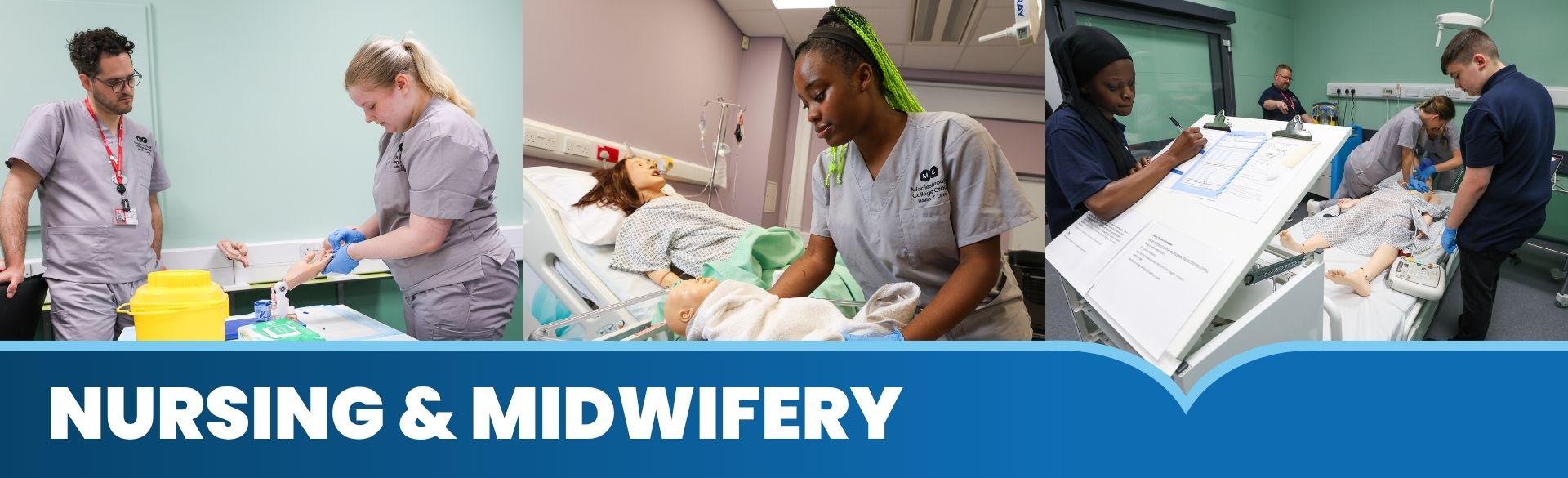
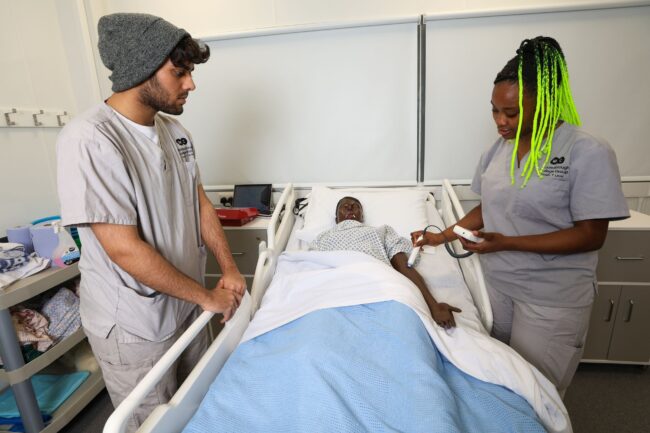
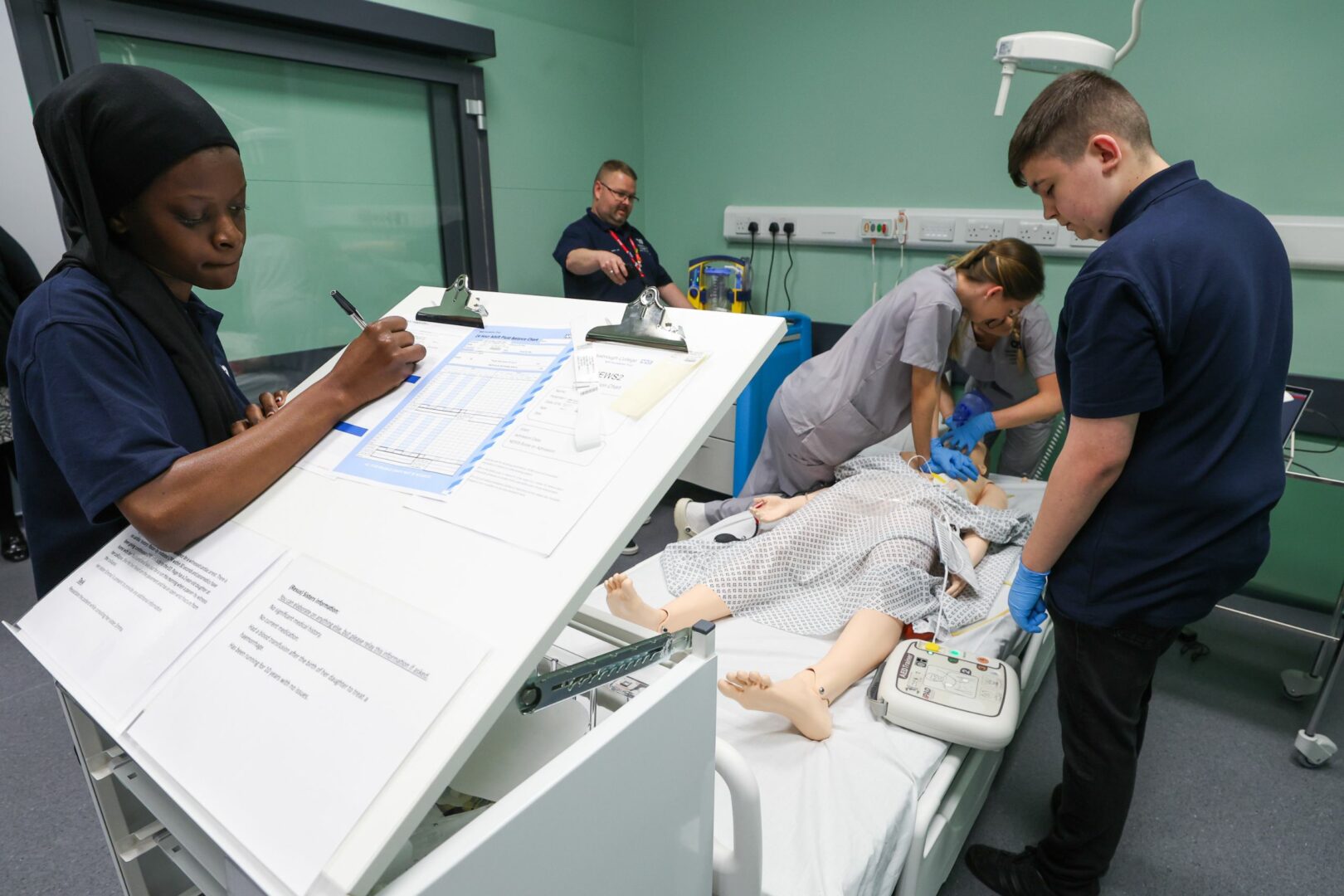
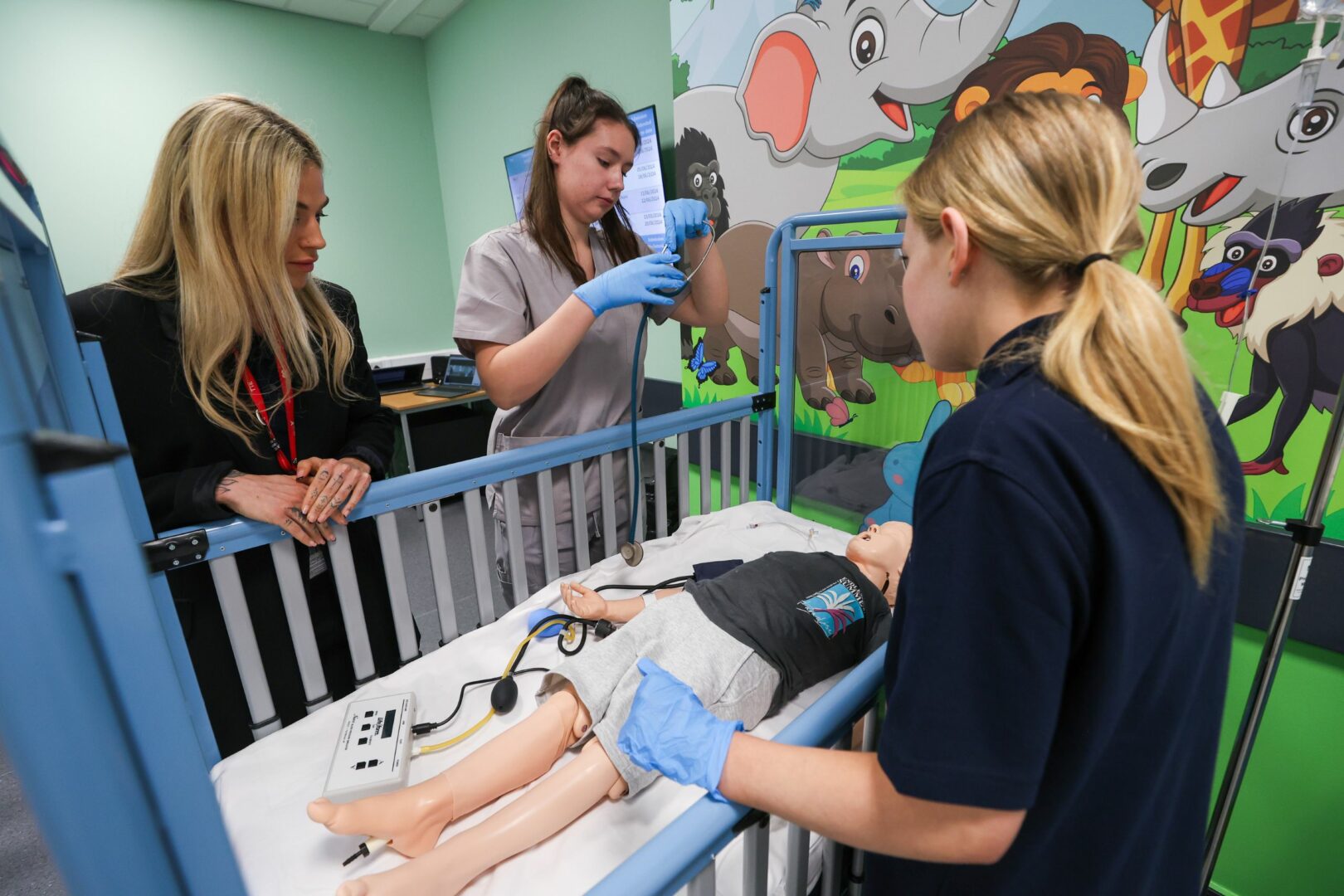
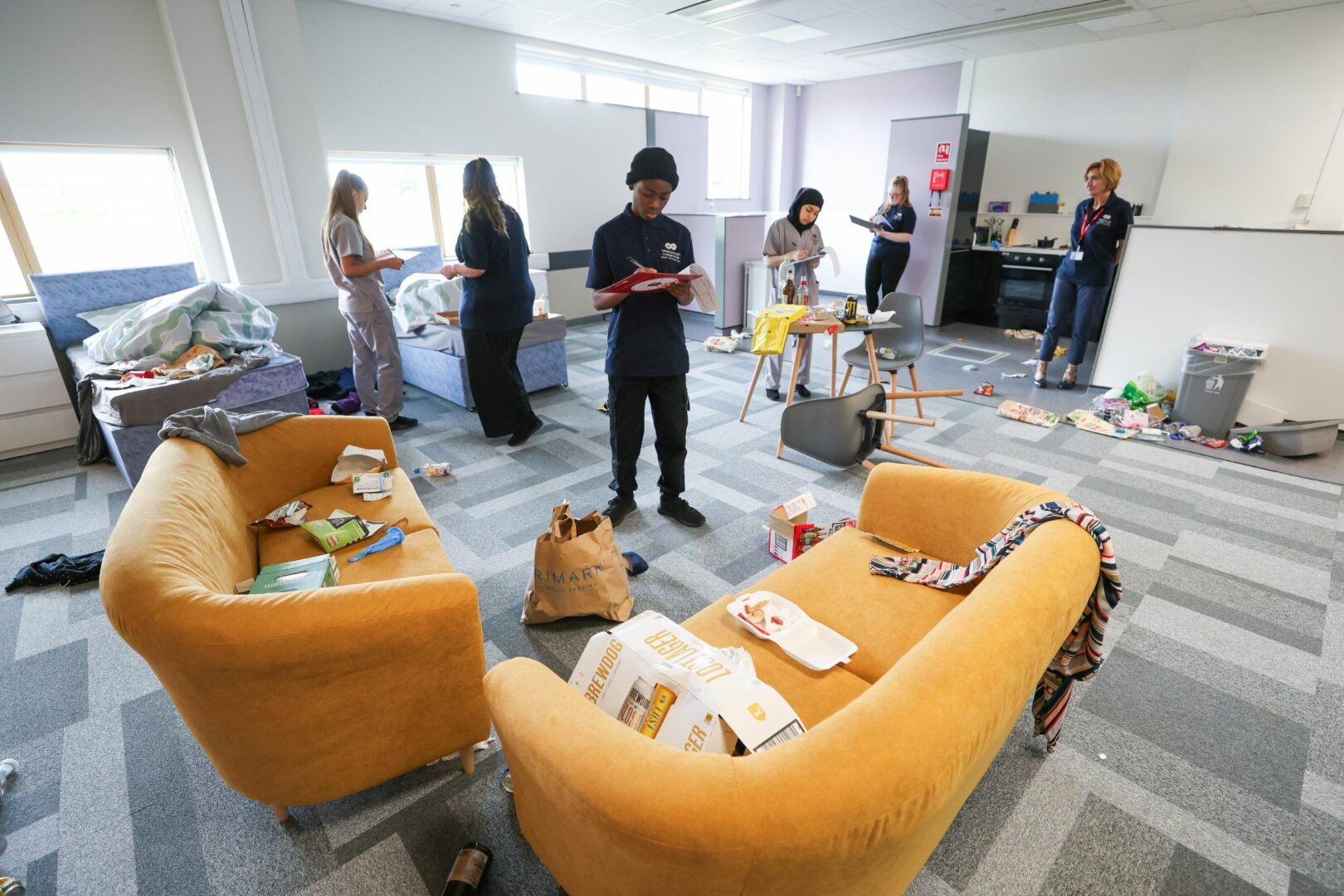
Our Health and Social Care Academy features state of the art educational and healthcare equipment, enabling an innovative, interactive, and hands-on approach to teaching and learning.
Key features include:
- A&E Resus Room and 5-bed ward
- Immersive Suite, that transforms into various real-life settings
- Clinical suite
- Maternity unit, complete with a pregnant manikin and newborn simulator
- Community/Self-contained flat, adaptable to various environments
- Mental Health Ward, equipped with anti-ligature fixtures
- Debrief and Conference Room, a professional space to participate in discussions
Nursing & Midwifery courses
Stepping into Nursing and Midwifery – Level 1
Health & Social Care
School Leaver
|
1 year
Age Group(16-18)
NCFE CACHE Certificate in Counselling Skills – Newcastle – Level 2
Health & Social Care
Adult Learner
|
8 weeks
NCFE CACHE
Pre-Access to Higher Education in Health
Health & Social Care
Adult Learner
|
10 weeks
Skills and Education Group Access
|
Age Group(19+)
Occupational Pathway in Social Care – Level 2
Health & Social Care
School Leaver
|
1 year
Middlesbrough College
|
Age Group(16-18)
Access to Higher Education Diploma (Health Science Professions) (Day) – Level 3
Health & Social Care
Adult Learner
|
1 year
Skills and Education Group Access
|
Age Group(19+)
Access to Higher Education Diploma (Health Science Professions) (Evening) – Level 3
Health & Social Care
Adult Learner
|
1 year
Skills and Education Group Access
|
Age Group(19+)
Access to Higher Education Diploma (Health Science Professions) (Distance Learning) – Level 3
Health & Social Care
Adult Learner
|
1 year
Skills and Education Group Access
|
Age Group(19+)
NCFE Award Preparing to Work in Adult Social Care – Level 1
Health & Social Care
Adult Learner
|
1 week
NCFE
|
Age Group(19+)
NCFE CACHE Certificate in Counselling Skills – Level 2
Professional Training
Adult Learner
|
14 weeks
NCFE CACHE
Where your course can lead
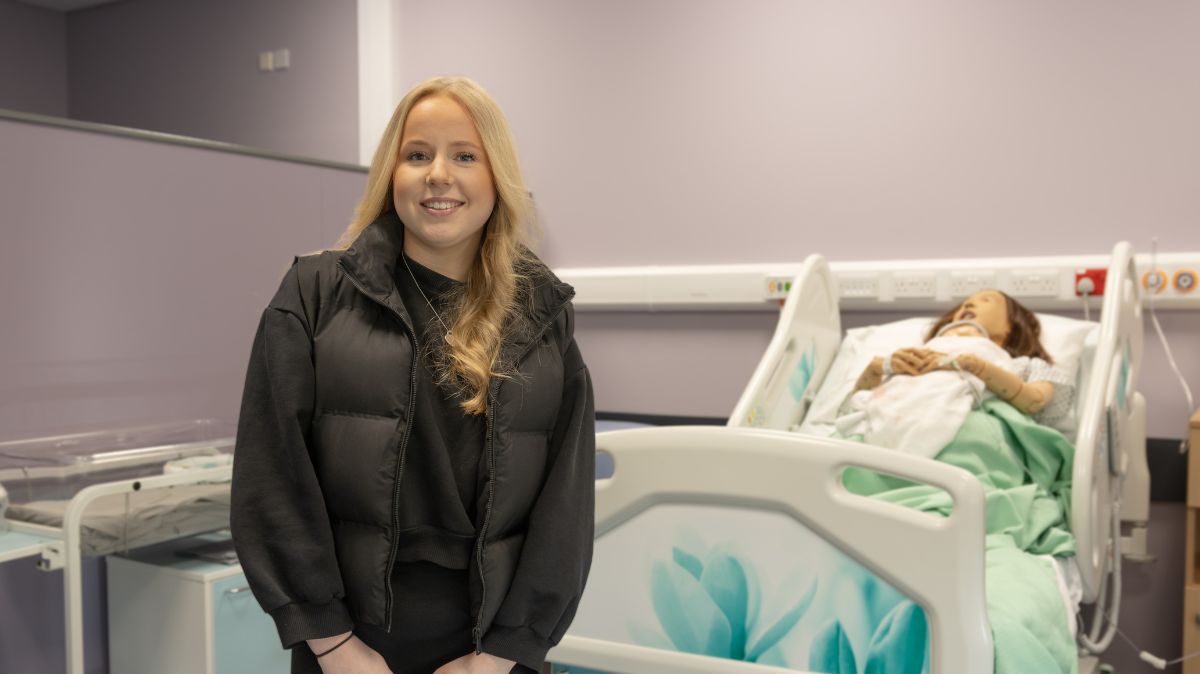
“The health ward facilities have been great, especially the maternity suite where there is a mannequin to practice delivering babies. Within the course, we’ve learned about person-centred care, safeguarding, and how to treat people with varying needs; this has greatly helped with my work placement, and we utilised these skills in our practical sessions at college.”
Freya Hollinshead
Employers we work with