Skip to content
Middlesbrough College logo
Open Digital Prospectus

Understanding Apprenticeships

Employer With Apprentices

Apprenticeships were introduced as a strategic solution to address the skills shortage in UK businesses. They offer a unique blend of classroom learning and hands-on training, enabling individuals to develop strong, professional skills that are easily transferable between organisations.

Typically lasting between one and five years, apprenticeships can be extended if pursued part-time. Upon completion, apprentices earn a professional qualification. Employers provide a salary, and the cost of tuition fees is shared between the employer and the government.

Open to anyone over the age of 16 who is not in full-time education, apprenticeships cater to various learning styles and career goals. They can be a rewarding and fulfilling option for those who:

  • Enjoy learning by doing and applying their knowledge to practical situations.
  • Want to start their career as soon as possible and gain relevant work experience.
  • Are motivated to balance work and study commitments and manage their time effectively.
  • Are keen to be assessed through a variety of methods, such as assignments, written work, and practical exercises.

Construction Apprentice

Apprenticeship Levels and Types

There are many apprenticeships available across a wide range of sectors and occupations, from engineering and construction to health and social care. They are designed to meet the needs of employers and the labour market and they are constantly updated to reflect the latest developments and innovations.

Apprenticeships are divided into four levels, depending on the level of qualification and the duration of the programme:

Intermediate apprenticeships (Level 2) – last 12 – 18 months and equivalent to 5 GCSE passes. They involve pursuing a Level 2 competency-based qualification (e.g. NVQ) and a Level 2 knowledge-based qualification (e.g. BTEC)

Advanced apprenticeships (Level 3) – last 18 – 24 months and equivalent to 2 A Level passes. They focus on a Level 3 competency-based qualification (e.g. NVQ) and a Level 3 knowledge-based qualification (e.g. BTEC or diploma).

Higher apprenticeships (Levels 4 and 5) – lasts 2 – 4 years and equivalent to a foundation degree or HND. They include a Level 4 or 5 competency-based qualification (e.g. NVQ) and a Level 4 or 5 knowledge-based qualification (e.g. diploma or foundation degree).

Degree apprenticeships (Levels 6 and 7) – lasts 3 – 6 years and equivalent to a bachelor’s or master’s degree. They involve a Level 6 or 7 competency-based qualification (e.g. NVQ) and a Level 6 or 7 knowledge-based qualification (e.g. bachelor’s or master’s degree).

Apprenticeships We Offer

All our apprenticeships are qualifications developed in consultation with employers by the Institute of Apprenticeships and Technical Education.

Our industry sectors include:

  • Beauty
  • Business, Accounting and Administration
  • Catering and Hospitality
  • Childcare and Education
  • Construction
  • Dental Care
  • Engineering and Manufacturing
  • IT, Computing and Digital Technologies
  • Motor Vehicle and Automotive Technology
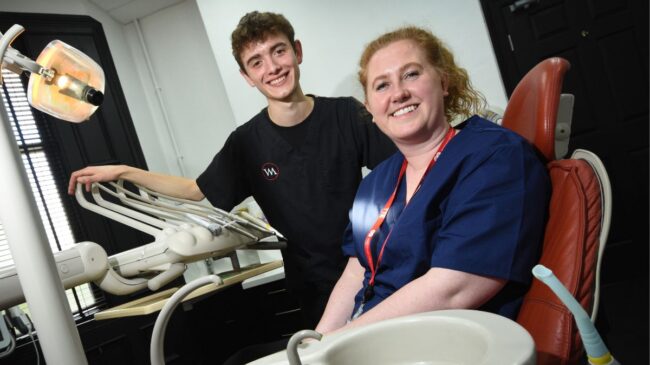
Dental Apprentice with Employer

How do apprenticeships work?

Apprenticeships are available across a range of sectors, from engineering and construction to digital and healthcare. They are roles within a business in which apprentices gain a qualification whilst learning hands-on skills in employment.

To start an apprenticeship, your child will need to search and apply for an apprenticeship vacancy. Your child will need to submit their CV and take part in an interview process with the Apprenticeship and Training team and the employer. Apprenticeship vacancies can be found on our website here or on the official Find An Apprenticeship website here and are updated regularly with new opportunities.

Apprenticeships are designed to meet employer needs and combine 80% hands-on work experience with 20% theoretical study, either at a University, College, or on the job. Apprentices receive a salary, and course fees are covered by the employer and the government.

Apprenticeship Standard vs Apprenticeship Vacancy

Whilst researching apprenticeships, you and your child will hear about standards and vacancies, and it can be tricky to know the difference:

Apprenticeship standard – the job role an apprentice is training for, that sets out the knowledge, skills and behaviours (KSBs) required to complete the apprenticeship. These were previously known as frameworks.

Apprenticeship vacancy – the role the apprentice takes on with an employer to gain the qualification. The job title may vary depending on the employer, but it will be matched with the appropriate standard. Employers can recruit apprentices throughout the year and advertise the role like a job role.

Our range of apprenticeship standards can viewed on our website, however your child will need to apply directly to an apprenticeship vacancy. The vacancy will list the role responsibilities, location, hours, salary, requirements and the apprenticeship standard.

If your child is unable to find an appropriate vacancy, they can register their details with the Apprenticeships and Training team and they will notify them of upcoming vacancies in their chosen industry. Click here to register.

How much will my child get paid?

Apprentices are entitled to a special minimum wage, which rises in accordance with their age and experience. Some companies will pay this wage initially and raise it. Employers can set their own wages.

The National Minimum Wage rate changes yearly. View the most up-to-date minimum wage for apprentices on the Gov website by clicking here.

Degree Apprenticeships

Degree apprenticeships (Levels 6 and 7) provide an excellent opportunity to earn a bachelor’s or master’s degree while working. These programs split your time between work and study, making them an attractive alternative to traditional university education.

Key benefits include:

No tuition fees: Covered by the employer and the government.

Salary: Apprentices receive a salary to cover living expenses, paid holidays, and sick leave. Salaries typically range from £7,000 to £18,000 per year, with some employers offering more.

Application process: Applicants apply directly through the companies offering the apprenticeships, not through UCAS.

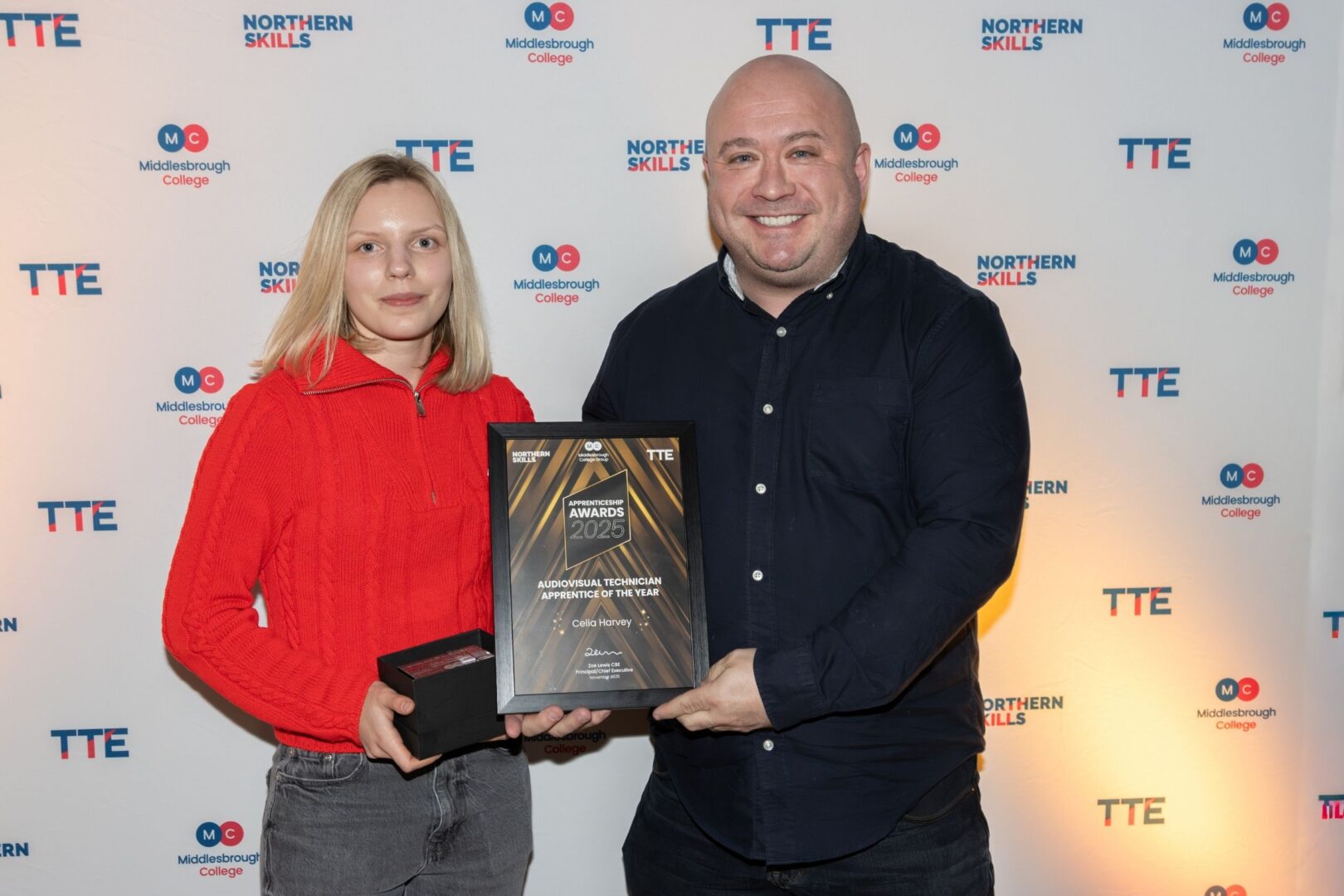
Audiovisual Technician Winner, Celia Harvey, with Sponsor BearTech's Rob Boville

Talk to us about your next step

Our friendly team are always happy to help! Get in touch with us to get your questions answered and to find out more about our College. Subscribe to our monthly newsletter and stay up to date.